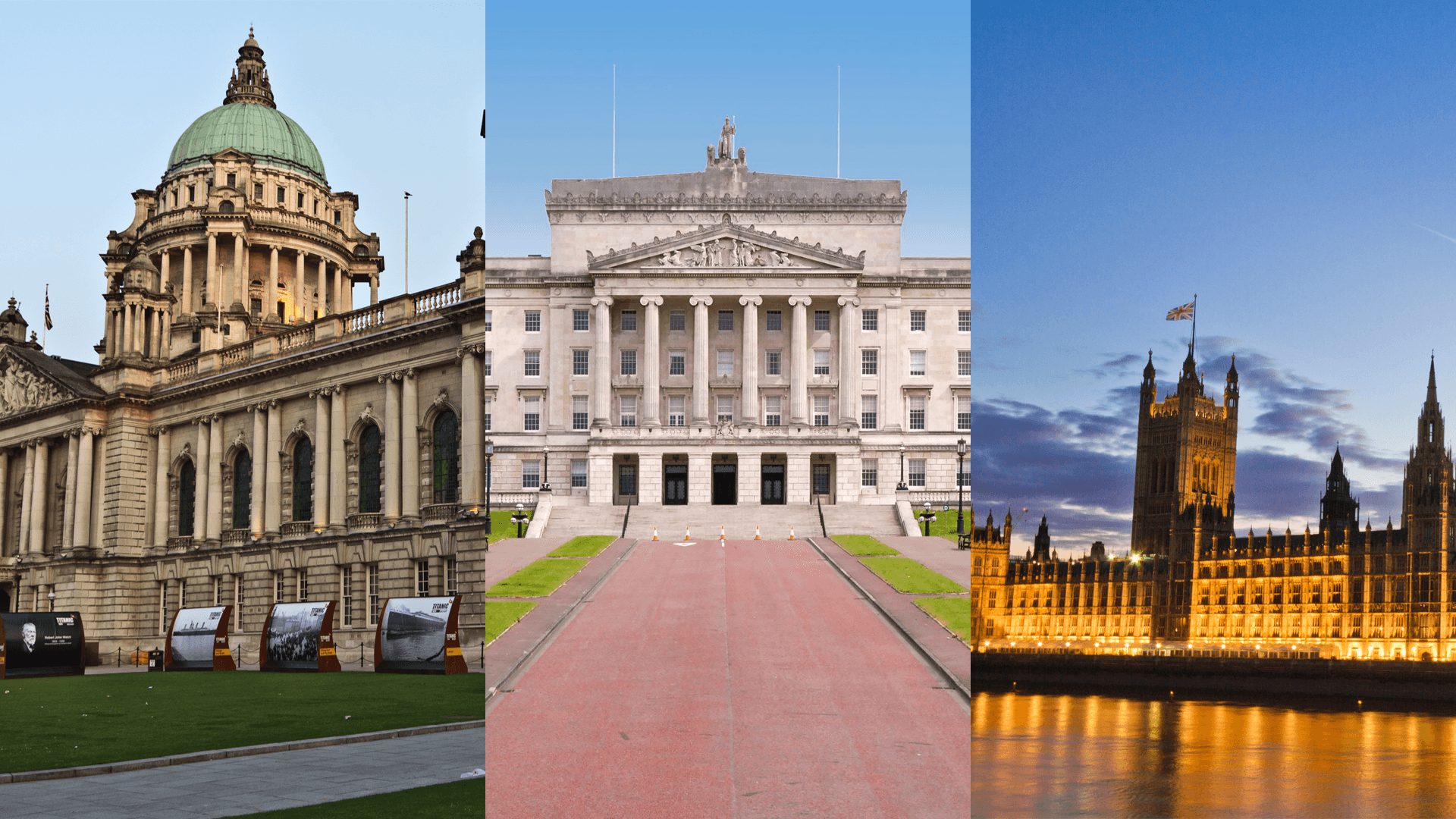
Northern Ireland has three different levels of government as a devolved region within the UK: Local Councils, the Northern Ireland Assembly, and the UK Parliament. What does each level do, and what are they responsible for?
Local Councils
In 2015, as part of the Review of Public Administration, councils in Northern Ireland were merged from 26 smaller councils to 11 ‘super councils’. They cover much larger areas and were given more responsibilities, including local planning decision and local economic development.
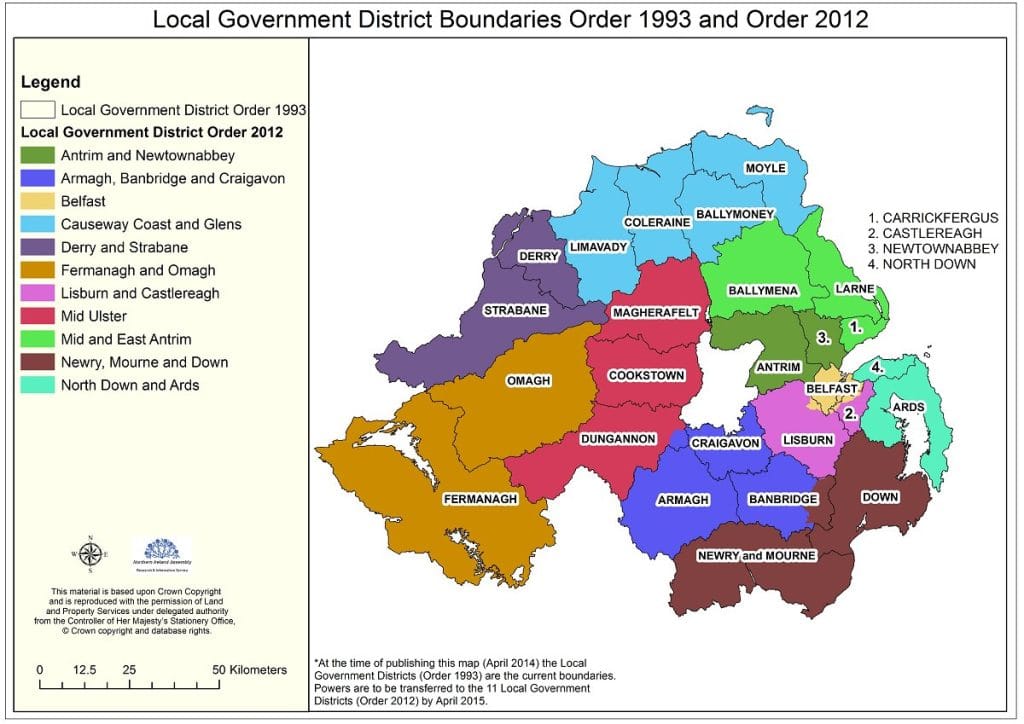
Local councils are responsible for waste and environmental services, planning and building control, leisure, culture and tourism, community and economic development, and licensing and regulation.
Essentially, councillors are elected to focus on local, everyday issues that affect members of the public.
Northern Ireland Assembly
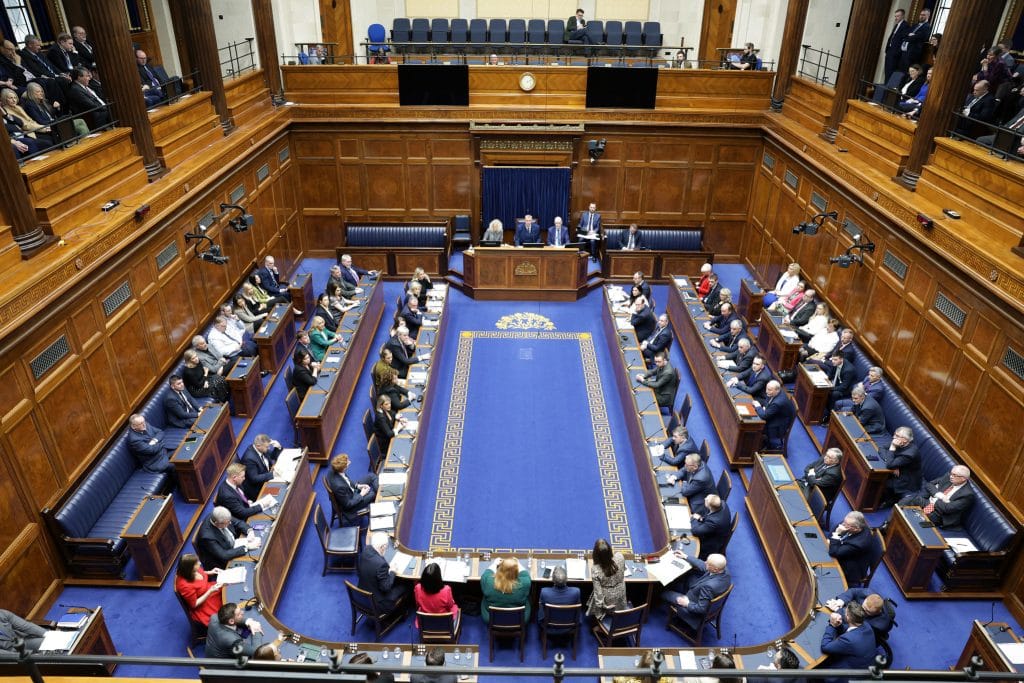
The Assembly is the devolved legislature for Northern Ireland. The group of 90 MLAs are elected to make laws and oversee government departments in areas that have been devolved by the UK government.
Government departments in Northern Ireland are run by the Northern Ireland Executive, which is made up of Ministers drawn from the Assembly. These Ministers are nominated under the power-sharing system and are responsible for overseeing devolved government departments.
Areas in which the Executive can legislate on include health, education, justice, infrastructure, agriculture, environment, economy and communities (housing, culture, sport).
The Executive is jointly-led by the First Minister and deputy First Minister, which are nominated by the largest party from each designation (unionist and nationalist). They cannot serve without the other, and despite the titles, they are both of equal status.
The Assembly also has a scrutiny mechanism through committees which reflect each of the government departments.
UK Parliament
The UK Parliament, based in Westminster, is the highest legislative authority and makes laws and oversees government for the UK. Like in Northern Ireland, Wales and Scotland also have devolved governments.
Certain matters are reserved or excepted by the UK Government, which means they remain under their control rather than the Assemblies. These include defence, foreign affairs, immigration and taxation and welfare policy.
During periods of direct rule, when the Assembly and Executive have been collapsed, the UK Government can legislate on devolved matters.
There are 18 constituencies in Northern Ireland with each having one Member of Parliament. An election is held at least every five years.